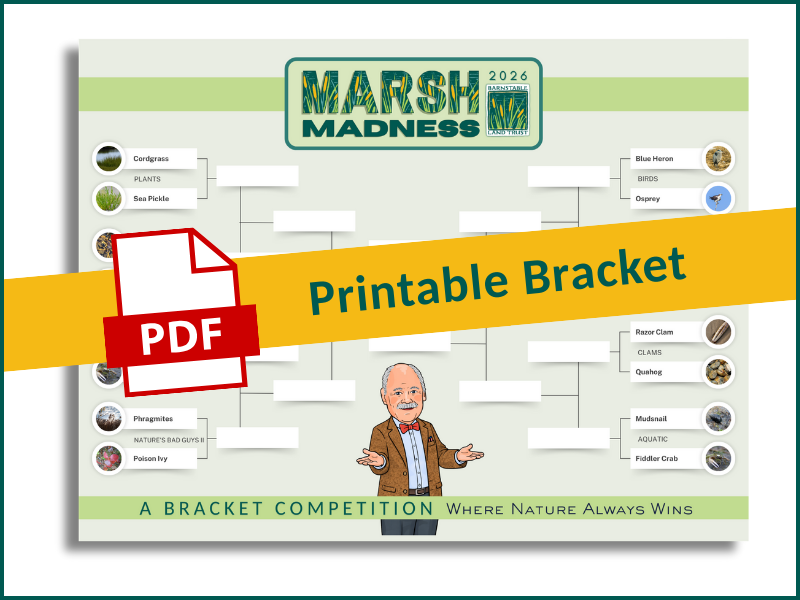
Salt air, strong tides, and serious bragging rights—welcome to Marsh Madness, Cape Cod–style. You don’t need a basketball bracket, a whistle, or a PhD in birding to play along—Barnstable Land Trust’s inaugural Marsh Madness is officially in session from February 22 – April 6.
Learn why every player has an important role within the marsh’s ecosystem and then vote to help us determine who is the 2026 Marsh Madness MVP!
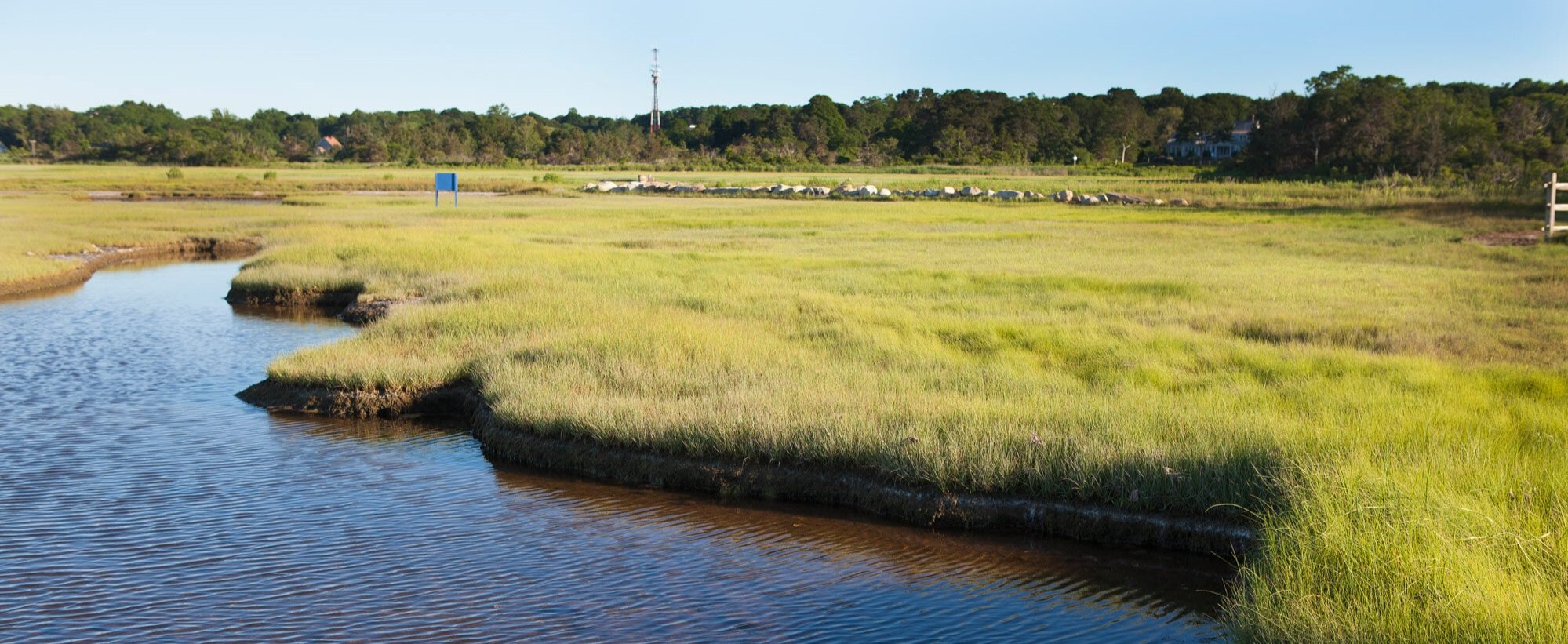
With more than 20,000 acres, Cape Cod’s marshes are the ultimate defensive line—buffering storms, fighting sea level rise, and taking on climate change like absolute champions. But the matchup is tough: according to the Association to Preserve Cape Cod (APCC), 36% (roughly 7,000 acres) of our historic salt marshes have already been lost or severely degraded.
All March long, it’s game on. Meet the marsh’s top contenders—from plants and birds to insects, marine life, and other habitat heroes (and a few notorious villains). Cast your votes, build bragging rights, score a chance at a prize package, and help crown Cape Cod’s conservation champions in this truly wild Marsh Madness match-up
A special thanks to Gil Newton, one of BLT’s founders, author, and naturalist educator and to Jasmine Kohler, a student at Cape Cod Community College who provided background research.
This program is also supported in part by a grant from the Mid-Cape Cultural Council, a local agency which is supported by the Mass Cultural Council, a state agency.
To stand at the edge of the sea, to sense the ebb and flow of the tides, to feel the breath of a mist moving over a great salt marsh, to watch the flight of shore birds that have swept up and down the surf lines of the continents for untold thousands of years, to see the running of the old eels and the young shad to the sea, is to have knowledge of things that are as nearly eternal as any earthly life can be.
Rachel Carson
Join the madness.
The marsh is counting on you.
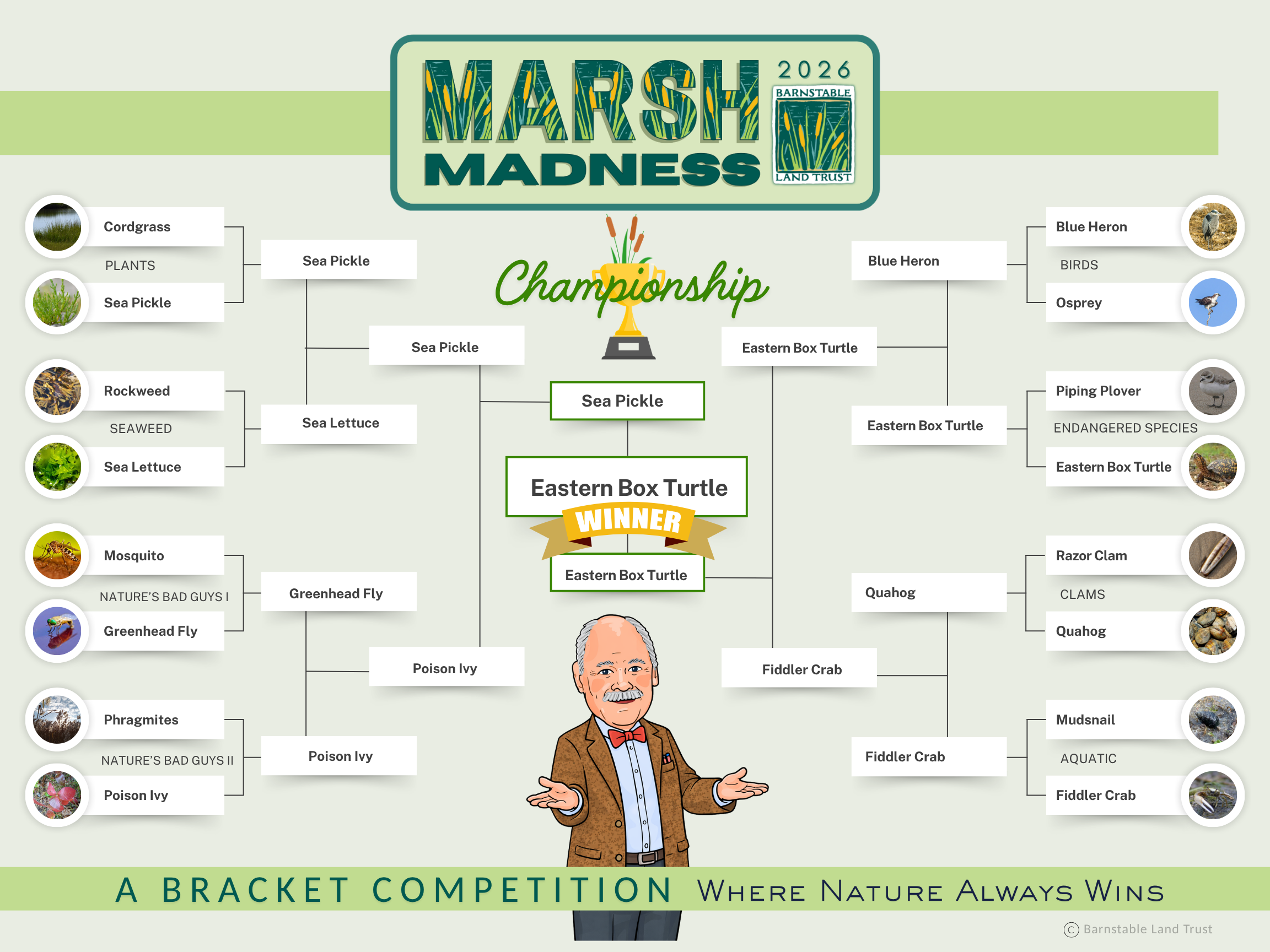
Meet the Contenders
Cordgrass
-
(Spartina alterniflora)
-
Cordgrass is a foundational species in salt marshes, known for its tall, green stalks that wave with the tide. This hardy grass grows in dense colonies and can tolerate flooding and salty conditions. It stabilizes the muddy banks of the marsh and supports a wide variety of wildlife. You’ll often see it lining tidal creeks and shorelines, where it forms the outermost edge of the marsh.
-
Grows up to 4–6 feet tall
Narrow, blade-like leaves
Hollow stems and rhizomes (underground stems)
-
Grows in the low marsh, closest to the water
Provides shelter for fish, crabs, and shrimp
Rhizomes help reduce shoreline erosion
Often used in coastal restoration projects
-
Acts as an “ecosystem engineer” by holding sediment in place, filtering runoff, and creating habitat for animals.
-
Erosion control
Nursery for marine life
Improves water quality
-
Can be invasive when introduced outside its native range
Dense growth may crowd out other plant species
-
"I'm the backbone of the salt marsh! Without me, the shoreline would wash away. I protect your coasts, shelter baby fish, and help the marsh thrive. I’m not flashy—but I’m essential!"
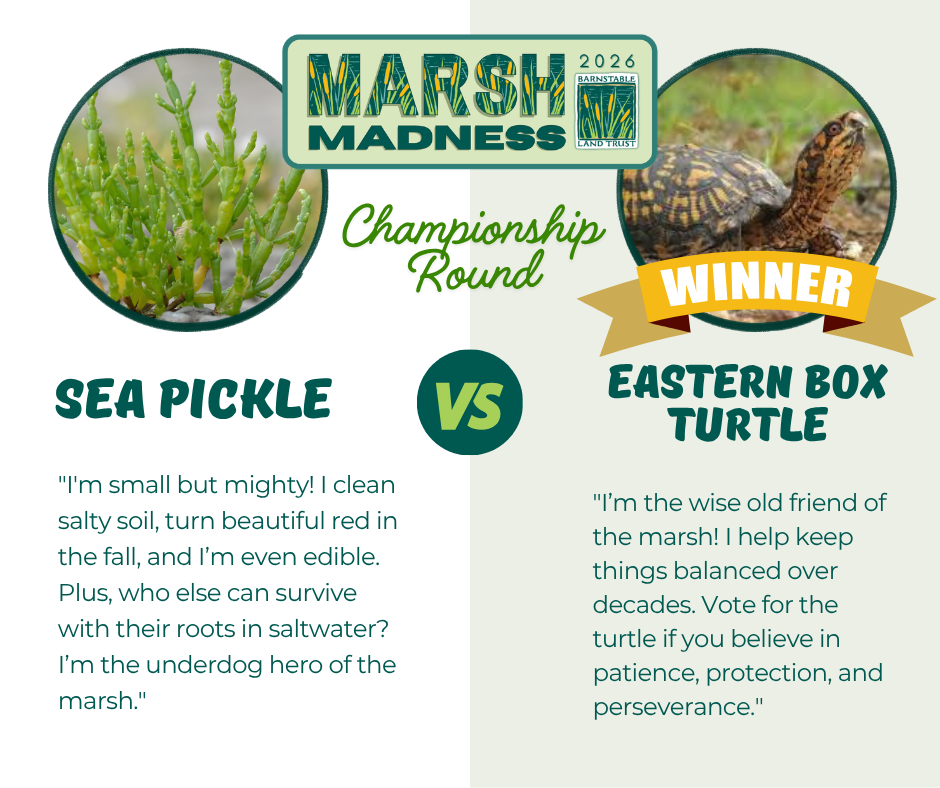
Sea Pickle
-
(Salicornia europaea)
-
Also known as glasswort or marsh samphire, Sea Pickle is a succulent plant that thrives in salty soils. It grows in the higher parts of the marsh that flood only occasionally. Its fleshy, bright green stems turn reddish in the fall, and it’s often edible (sometimes pickled!). Sea Pickle is smaller than Cordgrass but equally important to the health of the marsh.
-
Grows 2–16 inches tall
No true leaves—just jointed, fleshy stems
Turns red or purple in fall
-
Edible and used in gourmet cooking
Stores salt in its tissues to survive salty soils
Sometimes called “poor man’s asparagus”
Can absorb heavy metals from the soil
-
Helps trap sediments, reduce salt buildup in soil, and support biodiversity in higher marsh zones.
-
Reduces soil salinity
Improves marsh elevation stability
Adds biodiversity
-
Less effective for erosion control
Sensitive to trampling and overharvesting
-
"I'm small but mighty! I clean salty soil, turn beautiful red in the fall, and I’m even edible. Plus, who else can survive with their roots in saltwater? I’m the underdog hero of the marsh."
Rockweed
-
(Fucus vesiculosus)
-
Rockweed is a brown seaweed commonly found clinging to rocks along the intertidal zone. At low tide, its slippery, olive-green fronds can cover entire stretches of shoreline. It provides vital habitat and food for many marine organisms and plays a key role in buffering the shore from wave energy.
-
Olive-brown, flat, branching fronds
Small air bladders help it float
Up to 2 feet long
-
Air bladders give it buoyancy during high tide
Provides shelter for snails, crabs, and small fish
Used in fertilizers and spa products
Grows slowly—can live over 10 years
-
Stabilizes rocks and provides shelter and feeding grounds for marine life.
-
Provides habitat
Buffers wave action
Supports intertidal biodiversity
-
Can become slippery and hazardous on shore
May crowd out other algae in rocky areas
-
"I’m a natural protector! I keep shorelines safe, give crabs and snails a home, and I float with style. You’ll find me hugging the rocks and supporting life where the land meets the sea."
Sea Lettuce
-
(Ulva lactuca)
-
Sea Lettuce is a bright green, paper-thin seaweed found in shallow coastal waters. It looks like leafy salad greens and is edible (yes, even for people!). It grows quickly and thrives in nutrient-rich environments, especially near salt marshes and estuaries.
-
Leafy, sheet-like blades
Vivid green color
Grows 4–12 inches long
-
Eaten in salads and soups in some cultures
Grows fast—can double in size in a few days
Helps clean water by absorbing excess nutrients
Sometimes forms "green tides" in polluted water
-
Contributes to nutrient cycling and offers food for marine herbivores.
-
Edible and nutritious
Cleans nutrient-rich water
Provides food and shelter
-
Can grow too fast and smother other species
Signals high nutrient pollution
-
"I’m tasty, fast-growing, and a green-clean machine! I turn nutrients into leafy goodness, support the food chain, and add a splash of color to the coastline."
Mosquito
-
(Aedes spp.)
-
Mosquitos are infamous for their bites and buzzing. In salt marshes, certain mosquito species lay their eggs in wet soil or shallow pools. While annoying to humans, they are a food source for many birds and insects.
-
Small, ~0.1–0.2 inch
Long legs, slender body, and narrow wings
Females have a needle-like mouthpart
-
Only females bite
Can carry diseases like West Nile or Zika
Larvae are called "wrigglers"
Eggs can survive dry conditions for months
-
Base of the food web for dragonflies, birds, and fish.
-
Important food for many species
Their presence can signal stagnant water
-
Bites humans and animals
Can spread disease
Resources: https://www.cdc.gov/mosquitoes/index.html
-
"I get a bad rap, but I’m a vital food source for fish, frogs, and birds. I’m part of the web that keeps everything connected. Without me, the marsh would be way quieter—and not in a good way!"
Greenhead Fly
-
(Tabanus nigrovittatus)
-
These large, aggressive biting flies are notorious in coastal areas. Females feed on blood, while males stick to nectar. They breed in high marsh areas and can make beach trips miserable when active in summer.
-
About 1 inch long
Metallic green eyes
Strong, clear wings
-
Only females bite
Can carry diseases like West Nile or Zika
Larvae are called "wrigglers"
Eggs can survive dry conditions for months
-
Base of the food web for dragonflies, birds, and fish.
-
Important food for many species
Their presence can signal stagnant water
-
Bites humans and animals
Can spread disease
Resources: https://www.cdc.gov/mosquitoes/index.html
-
"Yes, I bite—but I keep you on your toes! My larvae help control pests, and I help feed marshland birds. I’m fierce, fast, and a vital part of the natural order. Vote Greenhead—nature’s tough love!"
Phragmites
-
(Phragmites australis)
-
Phragmites, or common reed, is a tall grass that forms dense stands in wetlands. While it’s a natural plant in some parts of the world, the invasive variety spreads aggressively in North American salt marshes, outcompeting native plants and changing ecosystems.
-
Can grow over 10 feet tall
Long, reed-like stems with fluffy seed heads
Forms thick monocultures
-
Used in thatching and basket weaving
Spreads through both seeds and underground rhizomes
Alters hydrology and soil chemistry
Difficult and costly to remove
-
Provides some roosting and nesting locations to birds; may offset problems that rapid sea level rise could pose.
-
Some erosion control
Provides nesting material
-
Displaces native species
Reduces habitat quality
Difficult to manage
-
"I grow fast, stand tall, and take over—but maybe a little too well. I’m powerful, but controversial. Vote for me if you like bold moves and fast growth!"
Poison Ivy
-
(Toxicodendron radicans)
-
Poison Ivy is a native vine or shrub that causes itchy, blistering rashes through contact with its oils. It thrives in disturbed areas, forest edges, and marsh uplands. While unpleasant for humans, it plays a surprising role in the ecosystem.
-
“Leaves of three, let it be”
Green in summer, red/orange in fall
Can grow as ground cover, shrub, or vine
-
85% of people are allergic to its oil (urushiol)
Berries are eaten by birds
Provides fall color and cover
Native to North America
-
Supports wildlife in upland/marsh transition zones.
-
Native species
Food for birds
Helps prevent erosion
-
Causes skin irritation
Difficult to remove safely
-
"I may be irritating, but I’m native, resilient, and valuable to wildlife. Vote for me—if you dare!”
Blue Heron
-
(Ardea herodias)
-
The Blue Heron is a tall, elegant wading bird commonly seen stalking shallow waters of salt marshes. It stands still or moves slowly, waiting for fish or amphibians to swim by before striking with its sharp beak. With its graceful flight and commanding presence, it’s one of the most iconic marsh birds.
-
Stands 3.5–4.5 feet tall
Wingspan up to 6.5 feet
Blue-gray plumage, long neck, dagger-like bill
-
Uses a slow, patient hunting style
Flies with its neck tucked in an “S” shape
Nests in trees near water, often in colonies
Eats fish, frogs, insects, and even small mammals
-
Top predator that helps control fish and insect populations.
-
Indicator of wetland health
Balances aquatic species
-
Sensitive to habitat disruption
May raid fish hatcheries
Learn More: National Audubon Society information page here.
-
"I strike with precision and grace! I'm a quiet guardian of the wetlands, keeping fish and insects in check. I'm elegant, patient, and a sure sign of a healthy marsh. Vote for the tall, cool hunter."
Osprey
-
(Pandion haliaetus)
-
The Osprey is a fish-eating bird of prey often spotted circling high above the marsh. Known for its dramatic hunting dive, the Osprey plunges feet-first into the water to catch fish with its curved talons. It builds large nests atop platforms, trees, or even utility poles near water.
-
Wingspan around 5–6 feet
White underparts, dark eye stripe
Hooked beak, strong legs with sharp talons
-
Almost exclusively eats fish
Can rotate one toe to grip fish better
Returns to the same nest year after year
Nicknamed “fish hawk”
-
Aerial predator that helps keep fish populations in check.
-
Shows healthy fish stocks
Supports ecotourism
-
Vulnerable to pollution and toxins
Competes with some fishers for food
Learn More: National Audubon Society information page here.
-
"I’m the king of the skies and the ultimate fisherman. With my keen eyes and diving skills, I bring drama and action to the marsh. Choose me if you want power and style with purpose!"
Piping Plover
-
(Charadrius melodus)
-
The Piping Plover is a small, sandy-colored shorebird that nests on open beaches and dunes. It’s federally protected due to its low population and habitat loss. These birds rely on undisturbed shorelines to lay their eggs in shallow, camouflaged nests.
-
Small, round body, about 7 inches long
Pale gray feathers with black neck ring
Orange legs and short black bill
-
Nests directly on sandy beaches
Pretends to have a broken wing to distract predators
Endangered due to beach development and human activity
Conservation efforts include symbolic fencing and monitoring
-
Feeds on insects and small crustaceans in intertidal areas.
-
Indicator of healthy beach ecosystems
Supports coastal biodiversity
-
Extremely sensitive to disturbance
Needs strict protection to recover
Learn More: National Park Service information sheet here.
-
"I’m tiny but tough! I survive on sandy shores and do my part in keeping bugs in check. Help protect your beaches—vote for the plover!"
Eastern Box Turtle
-
(Terrapene carolina)
-
The Eastern Box Turtle is a land-dwelling reptile often found in forests, meadows, and edges of marshlands. It’s slow-moving but long-lived and is considered vulnerable due to habitat loss, roads, and collection by people.
-
Domed, high shell with yellow/orange patterns
Hinged shell allows it to close up tightly
Grows 4–8 inches long
-
Can live 40–100 years
Omnivore—eats mushrooms, insects, and fruit
Returns to the same area for life
Populations decline if even a few adults are lost
-
Helps control insects and spread seeds in surrounding upland habitats.
-
Long lifespan means long-term ecosystem contributions
Seed disperser and scavenger
-
Slow reproduction
Threatened by cars, habitat loss, and pet trade
Learn More: State of Massachusetts (.gov) information sheet here.
-
"I’m the wise old friend of the marsh! I help keep things balanced over decades. Vote for the turtle if you believe in patience, protection, and perseverance."
Razor Clam
-
(Ensis directus)
-
Razor clams are sleek, elongated bivalves that live buried in sandy shores. They’re quick diggers and hard to catch, making them a fun target for clam diggers. They get their name from their shell’s resemblance to a straight-edge razor.
-
Long, thin shell, up to 6 inches
Smooth, shiny surface
Lives vertically in wet sand
-
Can dig up to 3 feet deep in seconds
Filter feeders—clean water as they eat
Very sensitive to vibrations
Sometimes used as bait
-
Filters water and stabilizes sand, improving sediment quality.
-
Cleans water
Aerates and stabilizes sediment
Popular food source
-
Sensitive to harvesting and habitat changes
Shells can be sharp
Learn More: State of Massachusetts (.gov) information sheet here.
-
"I’m fast, sleek, and clean your water while hiding in plain sight. Catch me if you can—or better yet, vote for me!"
Quahog
-
(Mercenaria mercenaria)
-
The Quahog is a thick-shelled, round clam often used in chowders. It lives in deeper muddy or sandy areas of estuaries and marshes. Known for its durability and long lifespan, the quahog is a staple species for both nature and people.
-
Hard, rounded shell with concentric rings
Grows up to 4 inches wide
Gray or brownish exterior
-
Can live 40+ years
Filter feeder that removes plankton and debris
Cultural icon in New England
Also known as the “hard clam”
-
Improves water clarity and supports fisheries.
-
Water cleaner
Economic importance
Long-living and stable
-
Overharvest risk
Sensitive to pollution
Learn More: State of the Waters Cape Cod: Northern Quahogs here.
-
"I’m the classic! Tough, tasty, and loyal to the marsh for decades. Pick the clam that never quits—vote Quahog!"
Mudsnail
-
(Ilyanassa obsoleta)
-
These tiny, dark-shelled snails blanket the muddy flats of salt marshes, feeding on detritus and algae. Often unnoticed, they play a vital role in recycling nutrients. Mud snails are well adapted to the brackish water and shifting sediments of their environment.
-
Small, usually < 1 inch long
Pointed spiral shell, dark brown or black
Slow-moving and abundant
-
Called “marine vacuum cleaners”
Often hosts tiny parasites
Females lay eggs in jelly-like strings
Feeds mostly on decaying organic matter
-
Decomposer that helps break down dead material and keep marsh floors clean.
-
Recycles nutrients
Supports food web (prey for birds/fish)
-
Overabundance can reflect poor water quality
Parasites may impact other wildlife
Learn More: Smithsonian Institution information page here.
-
“I keep things clean and running smoothly—think of me as the janitor of the marsh! I may be tiny, but I keep the ecosystem in balance from the ground up. Root for the little guy!”
Fiddler Crab
-
(Uca spp.)
-
Fiddler crabs are small crustaceans best known for the male’s oversized claw, which it waves to attract mates. These burrowing crabs thrive in muddy marsh zones and play a critical role in aerating the soil and cycling nutrients.
-
Body size ~1 inch
Males have one large claw, females have two small ones
Vary in color from tan to deep red or blue
-
Named after how their claw movement looks like “fiddling”
Males use claws in combat and display
Burrows reduce soil compaction
Active mostly during low tide
-
Ecosystem engineer—digs burrows, mixes soil, and improves drainage.
-
Improves soil and water flow
Supports marsh health and vegetation
-
Can over burrow in fragile areas
Claw waving can confuse researchers about aggression vs. courtship
Learn More: Cape Cod Chronicle Nature Connection: Feeling Crabby (July 2025).
-
“I’ve got charm, I’ve got moves—and I build homes that help the whole marsh breathe! My one big claw is my signature move. Vote for the crab that does it all: dig, dance, and defend!”
Vote
Check back during voting windows to cast your vote.
Round 1 - Sweet Sixteen: Sunday, February 22 – Sunday, March 1
Round 2 - Elite Eight: Sunday, March 8 – Sunday, March 15
Round 3 - Final Four: Sunday, March 22– Sunday, March 29
Round 4 - Championship (2-day voting window): Sunday, April 5 – Monday, April 6
Frequently Asked Questions
-
An initiative of Barnstable Land Trust (BLT), Marsh Madness is an online bracket competition where people can vote for their “fan favorite” while learning more about the importance of Cape Cod’s Marshes. This month-long virtual event (February 22 – April 6) is naturally positioned to rival college basketball’s March Madness popularity, as the environment commands the center court.
This is a single elimination tournament. For each match-up, vote for your favorite conservation champion. The nature superstar with the most votes advances to the next round. Only one will be crowned Marsh Madness champion. Meet the heroes – and villains - of the marsh, and vote for your favorite!
-
Barnstable Land Trust’s mission is to protect and preserve the natural spaces and places that make Barnstable so special. We hope Marsh Madness is a fun and creative way to:
Help people realize how alive, competitive, and interconnected a salt marsh really is. Framing plants, birds, insects, and marine life as “contenders” gives people a reason to notice—and care about—species they might otherwise overlook.
Not everyone is ready to read a habitat report or attend a lecture. A game is welcoming, accessible, and fun—perfect for kids, families, seasonal residents, and year-round locals alike.
Voting, following along, and sharing information creates a shared experience rooted in Cape Cod’s landscapes. We hope a sense of local pride motivates a long-term investment in why stewardship is so important.
People learn about marsh ecology, threats, and conservation wins organically—and we wanted to make it fun!
In the marsh, survival really is a mix of adaptation, competition, and resilience. We hope that Marsh Madness illustrates why the work of Barnstable Land Trust and land conservation efforts regionally are so critical to the future health of Cape Cod’s environment.
-
-
Round 1 - Sweet Sixteen: Sunday, February 22 – Sunday, March 1
Round 2 - Elite Eight: Sunday, March 8 – Sunday, March 15
Round 3 - Final Four: Sunday, March 22– Sunday, March 29
Round 4 - Championship (2-day voting window): Sunday, April 5 – Monday, April6
-
Fans can vote here during the competition dates above or by clicking on the links in BLT’s enewsletter and social media posts.
-
Every time you cast a vote and include your email address, you will automatically be entered into the prize package drawing. This means you have the potential to be entered up to four times – so don’t forget to vote in each and every round!
-
Salt marshes are coastal wetlands that form a transition zone between land and sea. They are ever-changing environments that are regularly flooded by seawater (twice-daily in this region) as the tides rise and fall. Salt marsh habitats are essential for healthy fisheries, coastlines and communities and play a vital role to play in protecting Cape Cod against the harmful effects of sea level rise and a changing climate.
-
Cape Cod has over 20,000 acres of salt marshes, but human activity has damaged or degraded a significant portion of them.
-
Overdevelopment: Filling or draining salt marshes for agriculture, and building tidal barriers like dikes and tide gates
Pollution: Runoff from wastewater and fertilizer, which can cause algal blooms that lower oxygen levels in the water
Mosquito ditching: Creating unnatural cuts and barriers in the marsh
-
HERE Association to Preserve Cape Cod’s (APCC’s) presentation on Salt Marshes: Natural Protection in a Changing Climate (December 2025)
HERE APCC’s Fact Sheet: Salt Marsh Preservation and Restoration
HERE BLT’s Marshes of Barnstable presentation by BLT founder and naturalist Gil Newton (April 2022)
HERE National Park Service’s page on Salt Marsh Dieback on Cape Cod
Upcoming 2026 Gil Newton Programs where you can experience marsh magic:
May 23: Lady Slipper Walk at Crocker Neck (BLT events HERE)
May 30:Ecology and the Use of Seaweed at Osterville Village Library (BLT events HERE)
And don’t miss this special event:
State of the Harbor, Barnstable Village: April 11, details TBA
-
MassAudubon: Long Pasture Wildlife Sanctuary • Cummaquid • 101 Acres • 2.5 miles
Pogorelc Sanctuary • West Barnstable • 9.9 Acres • 0.4 mile
Sandy Neck Beach Park • West Barnstable • 1,188 Acres • 7.5 miles
Follow the Madness on Social Media.